This is an EASY and flavorful entree that is also very versatile. In Sherry's and my opinion it was definitely one of the enlightening hits at the Shintani workshop on Oct. 13. Dr. Diane graciously obtained permission for me to print it. Once you get the method down it will be a snap for you to change the spices to suit the dish you are making and your tastes.
Note: My high techno-savvy brother-in-law taught me that the easiest way to print out these recipes from the blog is Cut and Paste it. That is, first, highlight it, hit the Cut button under Edit at the top of the screen, close down the site, go into the Word program and hit Paste under Edit.
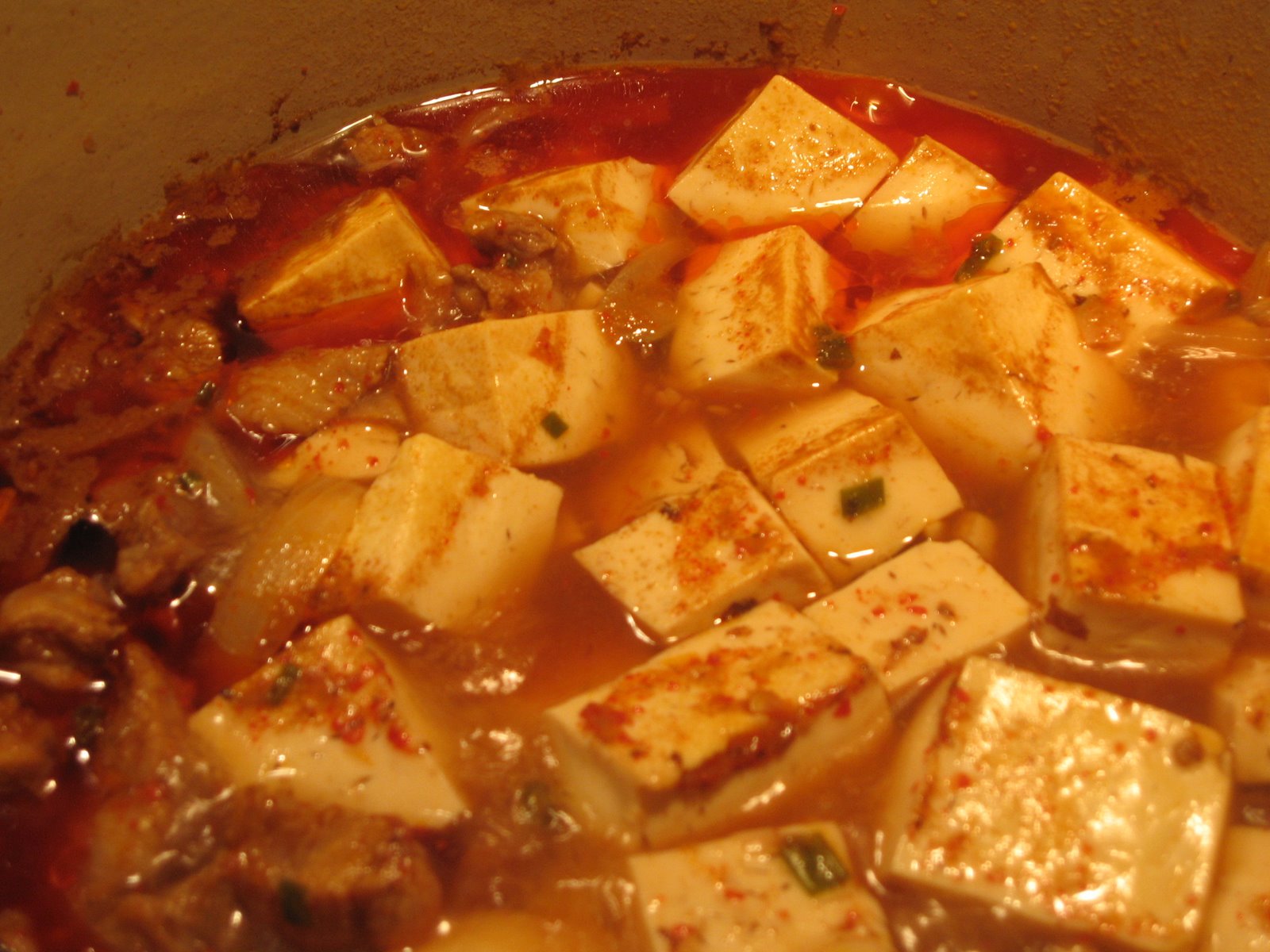
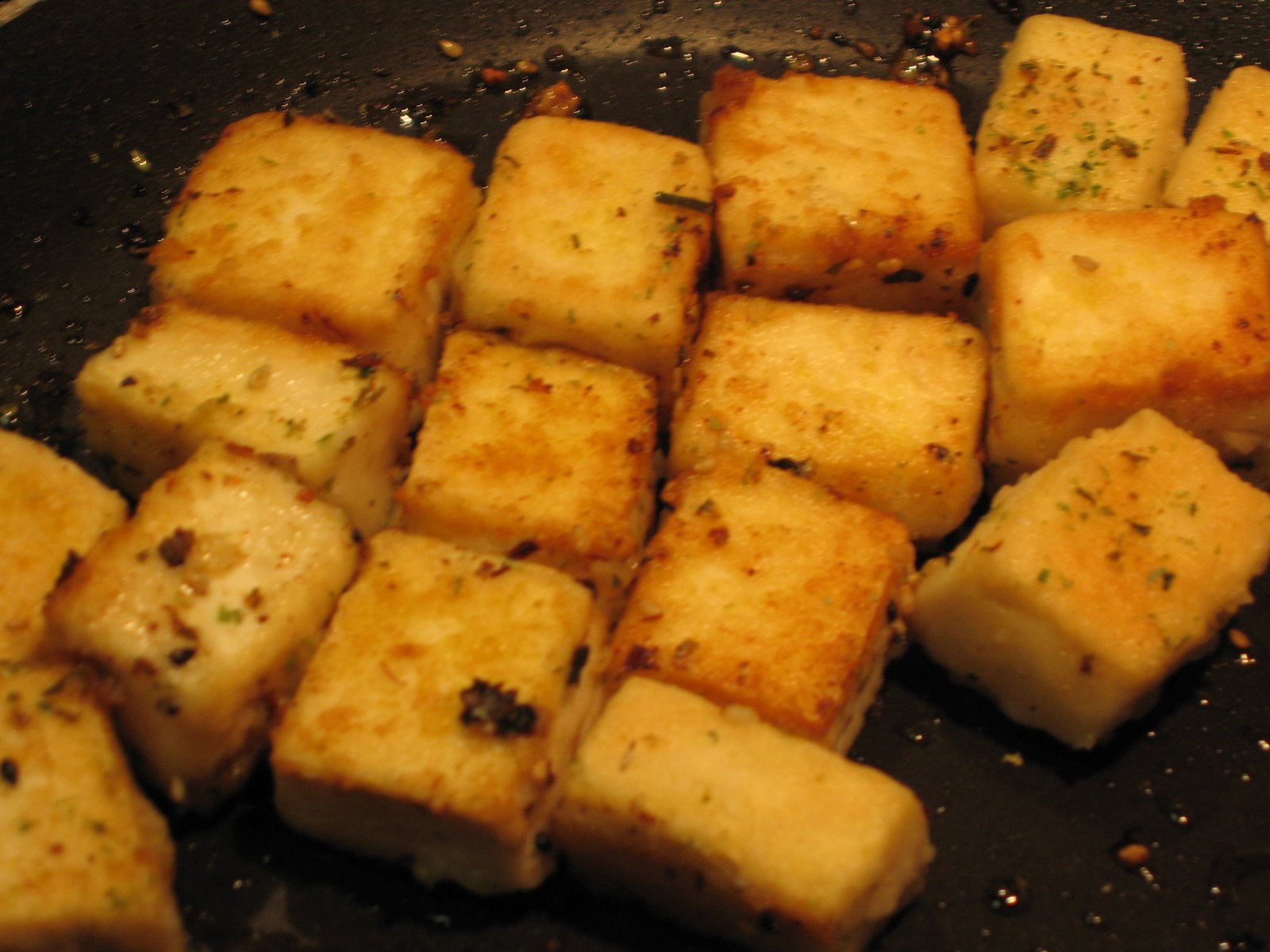
Spicy Tofu Nuggets
Adapted from Dr. Shintani’s diet books
1 block firm or extra-firm tofu
¼ c. flour, whole wheat or white, mixed with 1 tsp. Spike and other spices, e.g., 1 tsp. tumeric
2 tsp. canola or olive oil
1 tsp. sesame oil
1 –2 tsp. shoyu or Bragg’s liquid aminos (health food store)
2 tsp. nutritional yeast (health food store, optional, but good, can be bought in bulk at Down to Earth)
1 tsp. low salt furikake
Tofu is a plant based product. All plant based products have to be browned on a slightly lower heat than any meat. Best never to use high heat unless used briefly. It will take a bit longer so you need to watch the pan.
Drain tofu thoroughly and wrap in a paper towel or dish towel to absorb excess water. Cut tofu into 1 inch blocks. Dredge each tofu cube individually in the flour mixture. Keep dry. Heat a nonstick pan with a thin film of both oils on Medium heat. Place the cubes in the pan. Sprinkle the cubes with the shoyu or Bragg's. Brown tofu gently on all sides on Medium heat. A High heat may scorch the tofu.
Add the nutritional yeast and the furikake. Toss to coat evenly. Can deglaze the pan with 2 tsp. of water or broth so that the nuggets are a bit moist or leave dry according to your preference.
You can serve the nuggets with a dipping sauce or as is. A simple dipping sauce would be equal parts shoyu and sesame oil with a light sprinkle of shichimi togarashi or cayenne. Save any leftovers to be used in soups, stews, sandwiches, spaghetti, chili, etc., either whole or broken up.
You could also cut the tofu into slabs like tofu steaks and prepare the same way as the cubes. My friend, Wanda, reported that the spicy tofu works well in long strips in a Vegetarian Spring Roll.
Serve with brown rice. Soak raw rice at least 4 hours for the best consistency prior to cooking. Cook in rice cooker with slightly more water than indicated on the correct water level on the rice cooker pot. Fluff the rice with a nonstick rice paddle prior to serving.
Friday, November 2, 2007


Sunday, October 28, 2007
Shintani Lifestyle and Diet
Dr. Terry Shintani held one of his last 4 hour seminars two weeks ago. My sister, Sherry, and I count ourselves as lucky for being in attendance. Dr. Diane, the Administrator of the Hawai'i Health Foundation, the non-profit that runs the seminars, explained that the next two events, a Nov. 3, 2007 10 Day Program and a Feb., 2008 21 Day Program may be the last ones that Dr. Shintani does. So, Sherry and I felt very fortunate to be able to hear Dr. Shintani live.
Dr. Shintani is very well known for his groundbreaking work with diet not only in Hawai'i but globally. His book "The Hawai'i Diet" was on the NY Times bestseller list. He has a medical and a law degree from the UH and a Masters in Nutrition from Harvard. He's listed in the Encyclopedia Britannica. He's appeared on national television news shows. For more of his background you can go to the website which Dr. Diane designed and maintains at webhealthforyou.com/home
You know I am interested in anything to do with food. Some minor health problems prompted me to attend the seminar. My thought was that while I may never become a strict vegetarian, more knowledge would help me in making healthier choices in my food. I think Sherry and I got much more than we bargained for, in a good way.
Basically, if I were to sum up Dr. Shintani's diet plan (Sorry, Dr. Shintani if I use my own mana'o and words) I would say that it is a non-diet. It is a change in lifestyle which actually frees you to eat probably more types of food and a larger volume of food if that is what you want. It is a holistic approach that focuses on diet but includes exercise, our spiritual life, our attitudes, our beliefs and even our feelings of self-worth.
Dr. S. says that on average we need about 2,500 calories a day to maintain our weight with some differences depending on gender, weight, body type, activity, etc. It is better for our bodies if we put into it 2,500 calories of whole grains, low fat, plant based proteins, vegetables and fruits instead of refined flours, sugars and processed foods (think of the movie "Supersize Me"). He likes to say Junk In, Junk Out.
His books provide the Shintani Mass Index of Food which helps you to easily identify which foods are high in nutrition and low in the things that are bad for you, namely fats, animal based protein and refined processed food. As an example, it would take pounds and pounds of say, broccoli to reach 2,500 calories but only one or two meals of fast food. Maybe two cheeseburgers and two shakes. And, most importantly the former will fill up your stomach and make you full but the latter will leave you hungry for more if that is all you ate in one day. Dr. Shintani just uses examples with one food as with broccoli as a lesson, he promotes a widely varied and balanced daily diet. Everything in moderation.
Dr. Shintani, Dr. Diane, Down to Earth and many volunteers put on an enlightening seminar that is part instructional lectures, part cooking show and totally entertaining. Dr. Shintani's beliefs are firmly founded on scientific proof as well as common sense and stories of his many years in practice which includes years at the Waianae Coast Comprehensive Health Center. It is not an exaggeration to say that Sherry and I were astonished when we tasted the samples of breakfast, lunch and dinner which we were served. I had heard that people make scrambled tofu but until I actually tried it I didn't understand the concept. Sherry was especially taken with the Spicy Tofu Nuggets. These dishes were representative of the actually yummy, local, some Asian, some Pacific Rim recipes found in three of his books "Eat More, Weigh Less Diet" "Eat More, Weigh Less Cookbook" and "The Hawai'i Diet" by Dr. Terry Shintani.
So, here I am on Day 16 of my own version of the Dr. Shintani lifestyle. While Dr. Shintani and his family are vegans (no dairy, no eggs, no meat) he does not push his choices on you but offers an option and we are, of course, free to make our own food choices. No food police in my kitchen!
My diet these last couple of weeks has consisted of primarily plant based foods but sometimes up to 6 oz. of some form of meat a day. There was that birthday dinner last Friday at Mei Sum of scrumptious dim sum but surprisingly I found myself craving my whole grains by the following morning. The diet does make me feel better. It's hard to put my finger on, I just feel lighter like the difference between having some virtuous jai or oden and having a not-so-virtuous prime rib dinner.
OK, confession time. There are MANY health benefits to the Shintani Diet and it is a relatively easy way to lose weight but there were some pretty convincing Before and After the 21 Day program photos in a slideshow too. It was amazing that the women in particular in their After photos looked like the photo had been taken 10 years ago when they were younger! Well, a skeptic could say that the photos were altered. Not so! There were live, short testimonials at the seminar we attended and those same women in person look every bit as good, if not better, than when the last photos were taken, a year or more ago. How about that?!
-foodiewahine
ps: I made the Jim Lahey No Knead Bread recipe, below, using 2 c. bread flour and 1 cup stone ground whole wheat flour and it was great. I'll try flaxseeds, oat bran add-ins in the future and report. I'll keep you posted on the lifestyle changes and will add recipes in the future.
another ps: I'm not giving up my square of dark chocolate a day.
_____________________________________________________________________
This blog is written as a thank you to the tireless efforts of Dr. Shintani, Dr. Diane and volunteers who are passionate about their vision for healthier lives. A thank you to Sherry for going with me to the seminar and for her ongoing support and enthusiasm.
"Eat More, Weigh Less Diet", "Eat More, Weigh Less Cookbook" and "The Hawaii Diet" by Dr. Terry Shintani, MD, JD, MPH, as well as ebooks, other books and videos are all available from webhealthandyou.com, Dr. Shintani's website. See link to the left of this posting. A number of Dr. Shintani's eight books are also available on amazon.com
Dr. Shintani is very well known for his groundbreaking work with diet not only in Hawai'i but globally. His book "The Hawai'i Diet" was on the NY Times bestseller list. He has a medical and a law degree from the UH and a Masters in Nutrition from Harvard. He's listed in the Encyclopedia Britannica. He's appeared on national television news shows. For more of his background you can go to the website which Dr. Diane designed and maintains at webhealthforyou.com/home
You know I am interested in anything to do with food. Some minor health problems prompted me to attend the seminar. My thought was that while I may never become a strict vegetarian, more knowledge would help me in making healthier choices in my food. I think Sherry and I got much more than we bargained for, in a good way.
Basically, if I were to sum up Dr. Shintani's diet plan (Sorry, Dr. Shintani if I use my own mana'o and words) I would say that it is a non-diet. It is a change in lifestyle which actually frees you to eat probably more types of food and a larger volume of food if that is what you want. It is a holistic approach that focuses on diet but includes exercise, our spiritual life, our attitudes, our beliefs and even our feelings of self-worth.
Dr. S. says that on average we need about 2,500 calories a day to maintain our weight with some differences depending on gender, weight, body type, activity, etc. It is better for our bodies if we put into it 2,500 calories of whole grains, low fat, plant based proteins, vegetables and fruits instead of refined flours, sugars and processed foods (think of the movie "Supersize Me"). He likes to say Junk In, Junk Out.
His books provide the Shintani Mass Index of Food which helps you to easily identify which foods are high in nutrition and low in the things that are bad for you, namely fats, animal based protein and refined processed food. As an example, it would take pounds and pounds of say, broccoli to reach 2,500 calories but only one or two meals of fast food. Maybe two cheeseburgers and two shakes. And, most importantly the former will fill up your stomach and make you full but the latter will leave you hungry for more if that is all you ate in one day. Dr. Shintani just uses examples with one food as with broccoli as a lesson, he promotes a widely varied and balanced daily diet. Everything in moderation.
Dr. Shintani, Dr. Diane, Down to Earth and many volunteers put on an enlightening seminar that is part instructional lectures, part cooking show and totally entertaining. Dr. Shintani's beliefs are firmly founded on scientific proof as well as common sense and stories of his many years in practice which includes years at the Waianae Coast Comprehensive Health Center. It is not an exaggeration to say that Sherry and I were astonished when we tasted the samples of breakfast, lunch and dinner which we were served. I had heard that people make scrambled tofu but until I actually tried it I didn't understand the concept. Sherry was especially taken with the Spicy Tofu Nuggets. These dishes were representative of the actually yummy, local, some Asian, some Pacific Rim recipes found in three of his books "Eat More, Weigh Less Diet" "Eat More, Weigh Less Cookbook" and "The Hawai'i Diet" by Dr. Terry Shintani.
So, here I am on Day 16 of my own version of the Dr. Shintani lifestyle. While Dr. Shintani and his family are vegans (no dairy, no eggs, no meat) he does not push his choices on you but offers an option and we are, of course, free to make our own food choices. No food police in my kitchen!
My diet these last couple of weeks has consisted of primarily plant based foods but sometimes up to 6 oz. of some form of meat a day. There was that birthday dinner last Friday at Mei Sum of scrumptious dim sum but surprisingly I found myself craving my whole grains by the following morning. The diet does make me feel better. It's hard to put my finger on, I just feel lighter like the difference between having some virtuous jai or oden and having a not-so-virtuous prime rib dinner.
OK, confession time. There are MANY health benefits to the Shintani Diet and it is a relatively easy way to lose weight but there were some pretty convincing Before and After the 21 Day program photos in a slideshow too. It was amazing that the women in particular in their After photos looked like the photo had been taken 10 years ago when they were younger! Well, a skeptic could say that the photos were altered. Not so! There were live, short testimonials at the seminar we attended and those same women in person look every bit as good, if not better, than when the last photos were taken, a year or more ago. How about that?!
-foodiewahine
ps: I made the Jim Lahey No Knead Bread recipe, below, using 2 c. bread flour and 1 cup stone ground whole wheat flour and it was great. I'll try flaxseeds, oat bran add-ins in the future and report. I'll keep you posted on the lifestyle changes and will add recipes in the future.
another ps: I'm not giving up my square of dark chocolate a day.
_____________________________________________________________________
This blog is written as a thank you to the tireless efforts of Dr. Shintani, Dr. Diane and volunteers who are passionate about their vision for healthier lives. A thank you to Sherry for going with me to the seminar and for her ongoing support and enthusiasm.
"Eat More, Weigh Less Diet", "Eat More, Weigh Less Cookbook" and "The Hawaii Diet" by Dr. Terry Shintani, MD, JD, MPH, as well as ebooks, other books and videos are all available from webhealthandyou.com, Dr. Shintani's website. See link to the left of this posting. A number of Dr. Shintani's eight books are also available on amazon.com
Tuesday, August 7, 2007
Jim Lahey's Amazing Bread Recipe
The bread recipe I'm going to pass on is nothing short of wonderful. I don't impress easily. I've read thousands of recipes but this one seemed too good to be true. A simple bread recipe that you don't have to knead and, according to Jim Lahey, the professional baker who created it, rivals any commercially made bread in the country?
My LA pastry chef/instructor friend, Tina, (Mahalo plennny, Sistah!) sent me a link, several days ago, to an article written on 8 November of 2006 in the NY Times by Mark Bittman titled "The Secret of Great Bread: Let Time Do the Work". The recipe and the accompanying video about Lahey's recipe sounded and looked intriguing. Water, flour, yeast and salt and no special equipment? Perfect, artisinal style French bread? Tell me more!
My first attempt made with regular white flour in a 3.5 qt., stainless steel Belgique stockpot flattened out too much and did not have sufficient structure. I let it rise the full 18 hours. The bread did show promise. Do you know how really great French bread tastes cool as if it had been in the fridge? I have no other way to describe it. This bread has that. It had a great crumb, shattering crust and an almost sourdough taste. I just needed to find a good substitute for the heavy enamel Le Creuset pots that Jim Lahey uses to create the steam needed. Steam is important to make the dough rise properly and to create that great crust in the oven.
On my second try, I changed the regular flour to bread flour and baked the dough in a heavy Pyrex mixing bowl which is narrower on the bottom than the top. This feature is necessary to create height in the bread. I placed the Pyrex bowl in a covered terra cotta roaster to create the steam oven effect. The roaster also protects the Pyrex which can shatter at temperatures over 350 degrees. I then placed this whole baking set up on a pizza stone for extra insulation. Since our room temperature is about 80 degrees now, in the summer, I experimented and cut the first rise to just 4 hours. The flavor was less like sourdough and more like regular French bread but still very good. The extra long rising, as in my first attempt, ferments the dough. At left you see the results of my second attempt. Without a doubt it is the best French Boule I've ever made.
It is critical that you use the correct baking vessel or a combination of baking pieces to create a mini steam oven. Jim Lahey suggests using a cast iron, enamel, Pyrex or ceramic vessel for baking. It must have a cover and it must be thick and heavy. It should be narrower on the bottom if you want height to your bread. I improvised with what I have on hand and instead of one baking vessel I used two. I used a 2 qt. Pyrex mixing bowl set into a terra cotta roaster. The dough has to be extremely wet as well. Shirley Corriher (food chemist/author/frequent authority on Food Network's Good Eats) uses a similar wet technique in order to create fluffy, high biscuits.
To find the original article (NY Times, 8 November 2006) and video do a search on these words-
"The Secret of Great Bread Mark Bittman"
and a link to the original article will pop up. There are over 1200 links, emails, chats, even clubs that have sprung up. Hundreds of bakers are obviously excited over this new technique. I would highly recommend that you read the article prior to making the bread. Then, read through the recipe below before proceeding. It seems complicated but after making it once it will be very simple to make again.
NO KNEAD BREAD-French Boule
Adapted from Jim Lahey’s (owner of Sullivan St. Bakery in NY) recipe and
Matt Bittman's NY Times article published on 8 November 2006, “The Secret of Great Bread: Let Time Do the Work.”
3 c. King Arthur unbleached bread flour
¼ t. yeast, dry
1 and ¼ t. salt
additional flour, cornmeal, wheat bran or sesame seeds for covering and dusting
1 and 5/8 c. of water
In a large bowl combine flour, yeast and salt. Stir until all the ingredients are distributed evenly. Start with 1 and ½ c. water. As you mix, add 2 more “splashes” of water but not more than a total of 1 and 5/8 c. The dough should be shaggy, sticky, very wet and almost unmanageable. Mix until combined. Do not knead. Place in a greased plastic bowl and cover dough directly with plastic wrap. You can place the bowl in hot water to start the rising.
Let dough rest from between 4-18 hours depending on convenience and room temperature. The flavor develops over time. It should double and be covered with bubbles.
Scrape dough with a bench scraper onto a Silpat covered with flour. (See Note below to use flour-covered towels instead of a Silpat) Fold it over on itself once or twice. Let rest 15 min. Place dough into a greased plastic bowl set over hot water. Sprinkle with flour. Cover loosely with plastic wrap and let it rest for between 1-2 hours. Dough should be double in size and should not readily spring back when poked with a finger.
1/2 hour before baking, preheat oven to 450 degrees. Place a greased 2 qt. Pyrex mixing bowl set in a terra cotta roaster with a cover (or directly into a 3.5-8 qt. ungreased enamelled cast iron or greased cast iron, enamel, Pyrex or ceramic vessel with a cover) in the oven to heat for the half an hour. If you have a pizza stone it would be good to set this in the preheated oven as well. When dough is ready to bake, drop the dough into the hot Pyrex dish which is set in the terra cotta roaster. Shake to distribute evenly. Cover. Set on the pizza stone, if you have one. Bake covered for 20 min. and uncovered for 30 min. at 450 deg. Cool on a rack. After bread is completely cool you can store it at room temperature in a paper bag.
Note:You can also use towels, not terry cloth, lightly covered with flour instead of the Silpat and the bowl for the second rising.
In a follow up article, (NY Times, 6 December 2006 "No Kneading, but Some Fine Tuning") Mark Bittman noted that you can fold other additional ingredients into the bread at either the beginning of the recipe or after the first rising. Some suggestions are: roasted garlic cloves, sundried tomatoes, olives and herbs. Rosemary is perfect. Bittman also said that readers have given him feedback that you can use fish roasters for baguettes, muffin tins for rolls and regular loaf pans for the more traditional loaves but I haven't had a chance to experiment with these.
I will be making this bread often. The fragrance of the baking bread is indescribable. The taste, crumb and texture is superior to any bread I've made. My hope is that by publishing this recipe it will encourage you to try it. Then, share the bread and the recipe with those you love!
-foodiewahine
ps: Third batch-I sprinkled the top with a mix of poppy-seeds and sesame seeds, 1 T. each, prior to baking. Messy to eat, but adds a nice crunch and nutty flavor. Tina just pointed out to me that 50,000 people have viewed the video accompanying Bittman's article!
pss: Fourth batch-macerated dried bing cherries in rum and added pecans then topped bread with wheat bran. An 'ono breakfast bread.
If anyone tries this recipe please leave a comment how it turns out! I'd love to hear!
My LA pastry chef/instructor friend, Tina, (Mahalo plennny, Sistah!) sent me a link, several days ago, to an article written on 8 November of 2006 in the NY Times by Mark Bittman titled "The Secret of Great Bread: Let Time Do the Work". The recipe and the accompanying video about Lahey's recipe sounded and looked intriguing. Water, flour, yeast and salt and no special equipment? Perfect, artisinal style French bread? Tell me more!
My first attempt made with regular white flour in a 3.5 qt., stainless steel Belgique stockpot flattened out too much and did not have sufficient structure. I let it rise the full 18 hours. The bread did show promise. Do you know how really great French bread tastes cool as if it had been in the fridge? I have no other way to describe it. This bread has that. It had a great crumb, shattering crust and an almost sourdough taste. I just needed to find a good substitute for the heavy enamel Le Creuset pots that Jim Lahey uses to create the steam needed. Steam is important to make the dough rise properly and to create that great crust in the oven.
On my second try, I changed the regular flour to bread flour and baked the dough in a heavy Pyrex mixing bowl which is narrower on the bottom than the top. This feature is necessary to create height in the bread. I placed the Pyrex bowl in a covered terra cotta roaster to create the steam oven effect. The roaster also protects the Pyrex which can shatter at temperatures over 350 degrees. I then placed this whole baking set up on a pizza stone for extra insulation. Since our room temperature is about 80 degrees now, in the summer, I experimented and cut the first rise to just 4 hours. The flavor was less like sourdough and more like regular French bread but still very good. The extra long rising, as in my first attempt, ferments the dough. At left you see the results of my second attempt. Without a doubt it is the best French Boule I've ever made.
It is critical that you use the correct baking vessel or a combination of baking pieces to create a mini steam oven. Jim Lahey suggests using a cast iron, enamel, Pyrex or ceramic vessel for baking. It must have a cover and it must be thick and heavy. It should be narrower on the bottom if you want height to your bread. I improvised with what I have on hand and instead of one baking vessel I used two. I used a 2 qt. Pyrex mixing bowl set into a terra cotta roaster. The dough has to be extremely wet as well. Shirley Corriher (food chemist/author/frequent authority on Food Network's Good Eats) uses a similar wet technique in order to create fluffy, high biscuits.
To find the original article (NY Times, 8 November 2006) and video do a search on these words-
"The Secret of Great Bread Mark Bittman"
and a link to the original article will pop up. There are over 1200 links, emails, chats, even clubs that have sprung up. Hundreds of bakers are obviously excited over this new technique. I would highly recommend that you read the article prior to making the bread. Then, read through the recipe below before proceeding. It seems complicated but after making it once it will be very simple to make again.
NO KNEAD BREAD-French Boule
Adapted from Jim Lahey’s (owner of Sullivan St. Bakery in NY) recipe and
Matt Bittman's NY Times article published on 8 November 2006, “The Secret of Great Bread: Let Time Do the Work.”
3 c. King Arthur unbleached bread flour
¼ t. yeast, dry
1 and ¼ t. salt
additional flour, cornmeal, wheat bran or sesame seeds for covering and dusting
1 and 5/8 c. of water
In a large bowl combine flour, yeast and salt. Stir until all the ingredients are distributed evenly. Start with 1 and ½ c. water. As you mix, add 2 more “splashes” of water but not more than a total of 1 and 5/8 c. The dough should be shaggy, sticky, very wet and almost unmanageable. Mix until combined. Do not knead. Place in a greased plastic bowl and cover dough directly with plastic wrap. You can place the bowl in hot water to start the rising.
Let dough rest from between 4-18 hours depending on convenience and room temperature. The flavor develops over time. It should double and be covered with bubbles.
Scrape dough with a bench scraper onto a Silpat covered with flour. (See Note below to use flour-covered towels instead of a Silpat) Fold it over on itself once or twice. Let rest 15 min. Place dough into a greased plastic bowl set over hot water. Sprinkle with flour. Cover loosely with plastic wrap and let it rest for between 1-2 hours. Dough should be double in size and should not readily spring back when poked with a finger.
1/2 hour before baking, preheat oven to 450 degrees. Place a greased 2 qt. Pyrex mixing bowl set in a terra cotta roaster with a cover (or directly into a 3.5-8 qt. ungreased enamelled cast iron or greased cast iron, enamel, Pyrex or ceramic vessel with a cover) in the oven to heat for the half an hour. If you have a pizza stone it would be good to set this in the preheated oven as well. When dough is ready to bake, drop the dough into the hot Pyrex dish which is set in the terra cotta roaster. Shake to distribute evenly. Cover. Set on the pizza stone, if you have one. Bake covered for 20 min. and uncovered for 30 min. at 450 deg. Cool on a rack. After bread is completely cool you can store it at room temperature in a paper bag.
Note:You can also use towels, not terry cloth, lightly covered with flour instead of the Silpat and the bowl for the second rising.
In a follow up article, (NY Times, 6 December 2006 "No Kneading, but Some Fine Tuning") Mark Bittman noted that you can fold other additional ingredients into the bread at either the beginning of the recipe or after the first rising. Some suggestions are: roasted garlic cloves, sundried tomatoes, olives and herbs. Rosemary is perfect. Bittman also said that readers have given him feedback that you can use fish roasters for baguettes, muffin tins for rolls and regular loaf pans for the more traditional loaves but I haven't had a chance to experiment with these.
I will be making this bread often. The fragrance of the baking bread is indescribable. The taste, crumb and texture is superior to any bread I've made. My hope is that by publishing this recipe it will encourage you to try it. Then, share the bread and the recipe with those you love!
-foodiewahine
ps: Third batch-I sprinkled the top with a mix of poppy-seeds and sesame seeds, 1 T. each, prior to baking. Messy to eat, but adds a nice crunch and nutty flavor. Tina just pointed out to me that 50,000 people have viewed the video accompanying Bittman's article!
pss: Fourth batch-macerated dried bing cherries in rum and added pecans then topped bread with wheat bran. An 'ono breakfast bread.
If anyone tries this recipe please leave a comment how it turns out! I'd love to hear!
Saturday, July 28, 2007
Yummy Pineapple Chutney
Pineapple Chutney
(adapted from Sam Choy's recipe from The Choy of Cooking)
Sterilize jars.
8 c. finely chopped pineapple, core removed or drained canned pineapple works too
3 c. red wine or cider vinegar
1 scant T. sea salt
1 heaping tsp. red chili pepper flakes
3/4 c. chopped red pepper
1/4 c. chopped garlic (abt. 5 cloves)
1/4 c. chopped candied ginger of 2 T. fresh grated ginger
1/4 c. cranberries or raisins
Combine all ingredients in a heavy pot. Bring to a boil. Reduce heat and place on a high simmer for 1 and 1/2 hours, stirring often to prevent burning. If you are using canned pineapple you will not have to cook it as long, only 1 hour. Chutney should thicken and the pineapple should appear candied.
Note: this should make abt. 8, 1/2 pint jars of chutney.
For canning: process in a hot water bath for 10 min. on high according to manufacturer's instructions. Canned chutney is good for a year.
In the alternative, you can portion the chutney into clean, individual plastic containers but these have to be refrigerated and will only be good for abt. 2 weeks.
Great with curries, in or topping pound cake, ice cream, etc.
-foodiewahine
____________________________________________________________________
"The Choy of Cooking" by Sam Choy. Mutual Publishing, 1996. Sam's excellent cookbooks are available on amazon.com and local bookstores.
(adapted from Sam Choy's recipe from The Choy of Cooking)
Sterilize jars.
8 c. finely chopped pineapple, core removed or drained canned pineapple works too
3 c. red wine or cider vinegar
1 scant T. sea salt
1 heaping tsp. red chili pepper flakes
3/4 c. chopped red pepper
1/4 c. chopped garlic (abt. 5 cloves)
1/4 c. chopped candied ginger of 2 T. fresh grated ginger
1/4 c. cranberries or raisins
Combine all ingredients in a heavy pot. Bring to a boil. Reduce heat and place on a high simmer for 1 and 1/2 hours, stirring often to prevent burning. If you are using canned pineapple you will not have to cook it as long, only 1 hour. Chutney should thicken and the pineapple should appear candied.
Note: this should make abt. 8, 1/2 pint jars of chutney.
For canning: process in a hot water bath for 10 min. on high according to manufacturer's instructions. Canned chutney is good for a year.
In the alternative, you can portion the chutney into clean, individual plastic containers but these have to be refrigerated and will only be good for abt. 2 weeks.
Great with curries, in or topping pound cake, ice cream, etc.
-foodiewahine
____________________________________________________________________
"The Choy of Cooking" by Sam Choy. Mutual Publishing, 1996. Sam's excellent cookbooks are available on amazon.com and local bookstores.
Wednesday, July 4, 2007
Volcano Visit
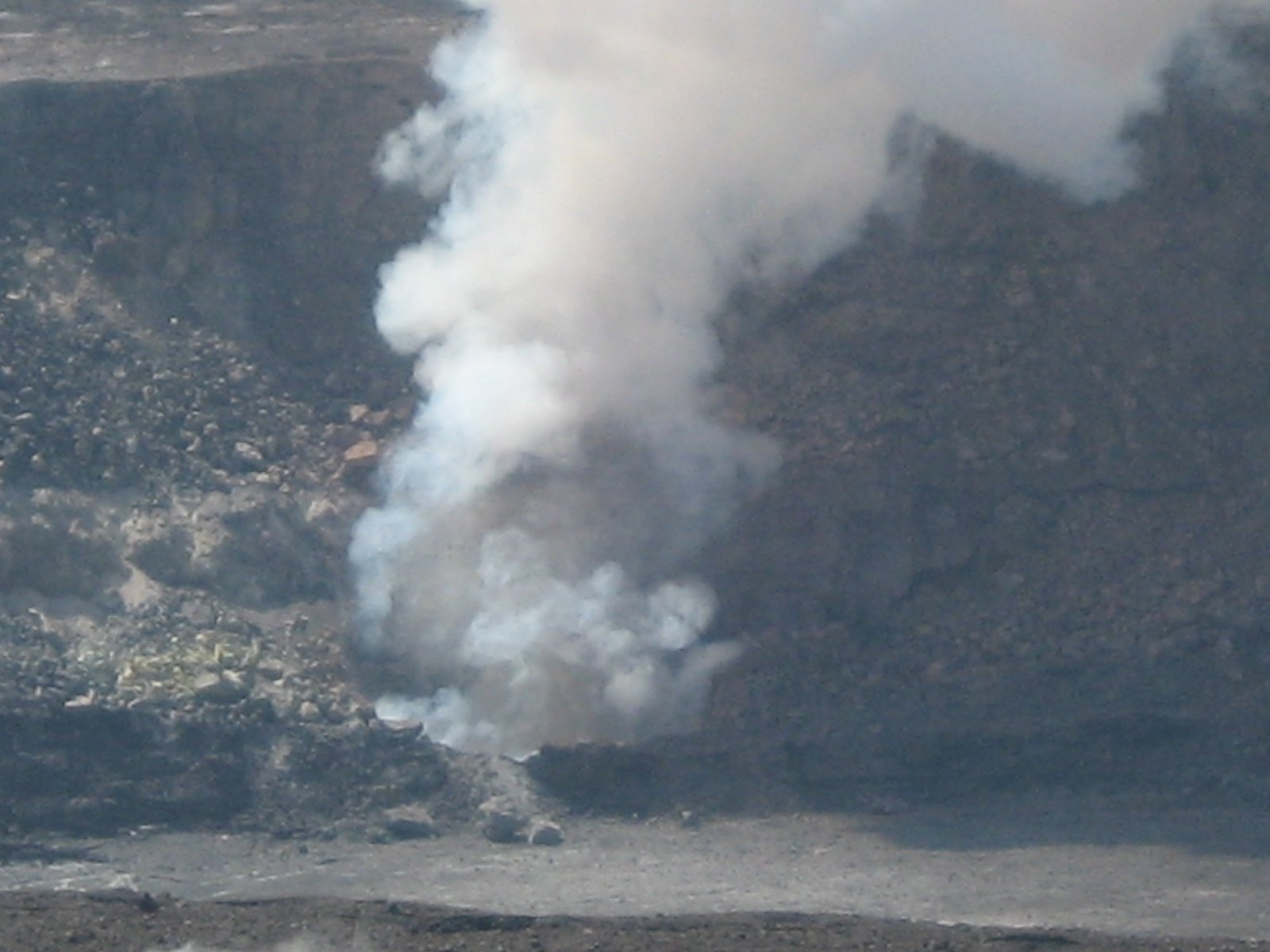
I've loved Volcano on the Big Island forever, it seems. I've mentioned before that my cousins, the Vances, used to live there and we would visit. For years and years, Volcano's been the first place I go to if I land on the Hilo side. Last year, I stayed overnight at the Volcano House. A week ago, I was blessed to stay at a home in Volcano Village with a kitchen. I stress kitchen because that makes a big difference to anyone who loves to cook and bake.
Hilo's Farmers' Market has two days, Wednesday and Saturday, when most of their 30+ vendors are there. The rest of the week there may be two or three vendors with anthuriums and some produce. I tend to think of O'ahu foodies as quite sophisticated but a visit to the Hilo Market is always mindblowing. I always find something I've never seen before at crazy good prices.
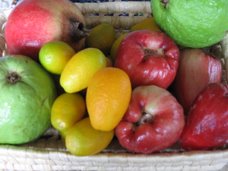
This visit my favorite items were a cabbage sized bundle of shiso leaves for just a dollar, hearts of palm, fresh bamboo shoots and sweet, fragrant and perfectly ripe mountain apples. I could also have gotten jackfruit and bags of common or Chinese mangoes for chutney. I had to call my chef friend, Tina, in LA for her to give me a blow by blow account on how to prepare the hearts of palm. You can either shave it extremely thinly, raw, or boil the "stalks" in salted water for about 5 min. I chose the latter. It made a great salad one night with hot chicken soup on one of those lovely evenings when there's both Volcano mist and a light rain. My friend, Ku'ulei, brought hot rice, an organic salad mix from Hirano store and a memorable, not-too-sweet strawberry rhubarb pie from the Volcano Farmers' Market.
I thought the 6 in. pie was a bit much for dessert in addition to a fruit pastry I had. And I didn't want to warm the whole thing. So, I said to Ku'ulei (a dessert freak, too) "I'm going to cut the pie in half". Ku'ulei looked at me quizzically, tilted her head and said "Fourths?" It dawned on me that she thought I meant we would split the pie in half and eat the whole thing! I laughed so hard I could hardly breathe. The next thing she said was "You're going to write about this, aren't you?" Yes, I am.
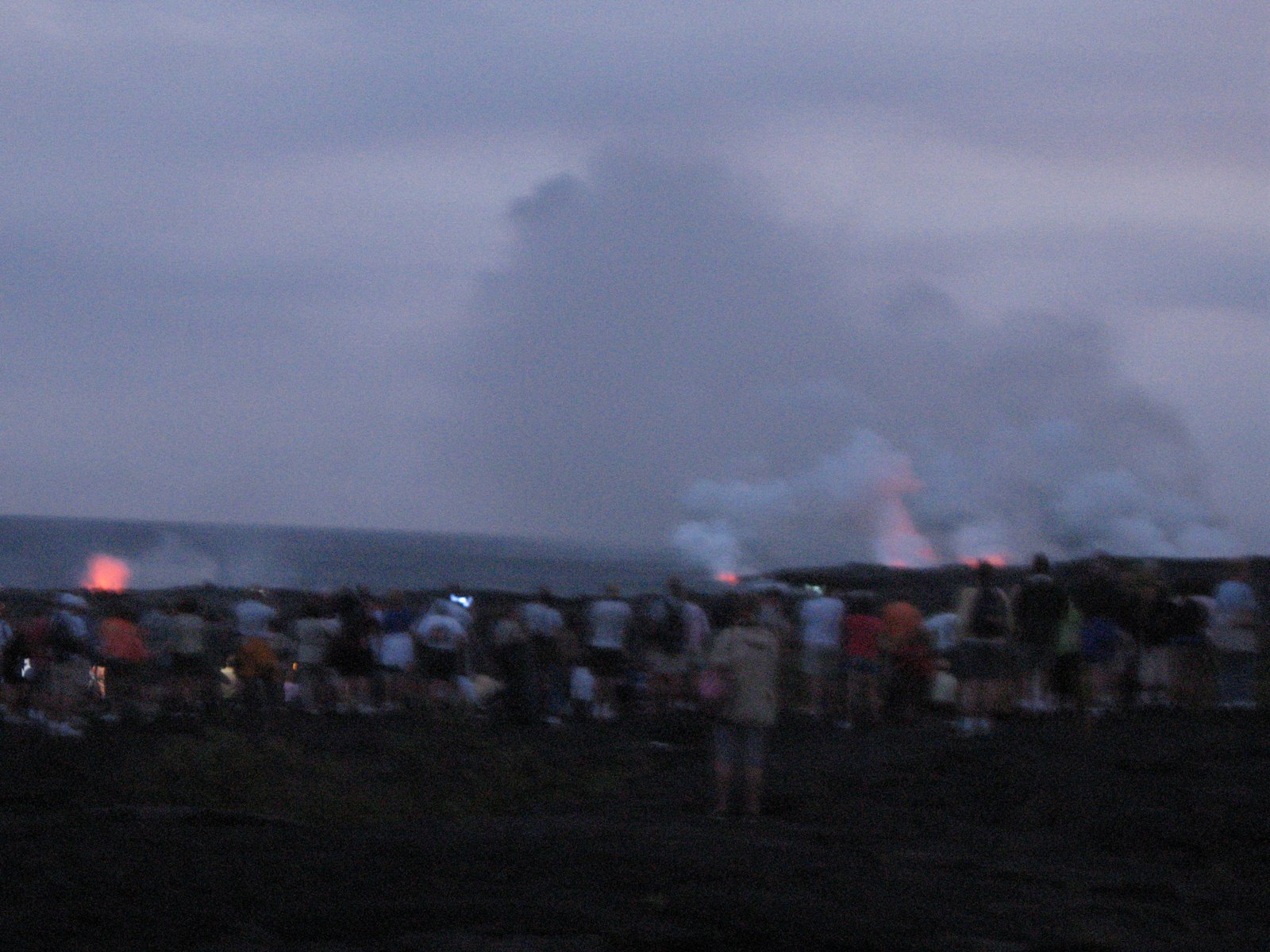
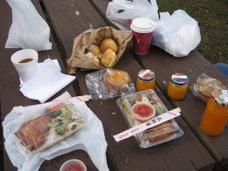
One of the greatest advantages of staying in the Volcano area is that the Hawai'i Volcanoes National Park becomes your playground. It's especially nice to visit in the early morning and late evening after the crowds have left. Imagine a hot pizza from the Village whisked over to the Steam Vents and eaten (no, scarfed down) in the car as the sun sets behind Mauna Loa. Or, an early morning meditative hike to Byron's Ledge to catch Nene goose in the wild. Can you see eating a light breakfast of hard boiled eggs, mountain apples, hot coffee and POG (passion-orange-guava juice) in a glass jar as you sit on an ohia log?
This visit was mostly about hiking the many trails of the Volcano Park and visiting with three dear friends who were all on the island.
Hearts of palm, shiso and tomato salad
Vinaigrette:
Whisk together 2 Tablespoons balsamic vinegar with 1/4 c. olive oil. Add just a half teaspoon or so of honey.
Salad:
Slice boiled hearts of palm into 1/4" slices. Julienne shiso leaves. Slice vine ripened tomatoes. Add all to vinaigrette. Let sit at room temperature for 20 minutes. Just before serving, lightly toss the palm, shiso, tomatoes and vinaigrette with an organic greens salad mix.
-the foodiewahine
Hilo's Farmers' Market has two days, Wednesday and Saturday, when most of their 30+ vendors are there. The rest of the week there may be two or three vendors with anthuriums and some produce. I tend to think of O'ahu foodies as quite sophisticated but a visit to the Hilo Market is always mindblowing. I always find something I've never seen before at crazy good prices.
This visit my favorite items were a cabbage sized bundle of shiso leaves for just a dollar, hearts of palm, fresh bamboo shoots and sweet, fragrant and perfectly ripe mountain apples. I could also have gotten jackfruit and bags of common or Chinese mangoes for chutney. I had to call my chef friend, Tina, in LA for her to give me a blow by blow account on how to prepare the hearts of palm. You can either shave it extremely thinly, raw, or boil the "stalks" in salted water for about 5 min. I chose the latter. It made a great salad one night with hot chicken soup on one of those lovely evenings when there's both Volcano mist and a light rain. My friend, Ku'ulei, brought hot rice, an organic salad mix from Hirano store and a memorable, not-too-sweet strawberry rhubarb pie from the Volcano Farmers' Market.
I thought the 6 in. pie was a bit much for dessert in addition to a fruit pastry I had. And I didn't want to warm the whole thing. So, I said to Ku'ulei (a dessert freak, too) "I'm going to cut the pie in half". Ku'ulei looked at me quizzically, tilted her head and said "Fourths?" It dawned on me that she thought I meant we would split the pie in half and eat the whole thing! I laughed so hard I could hardly breathe. The next thing she said was "You're going to write about this, aren't you?" Yes, I am.
One of the greatest advantages of staying in the Volcano area is that the Hawai'i Volcanoes National Park becomes your playground. It's especially nice to visit in the early morning and late evening after the crowds have left. Imagine a hot pizza from the Village whisked over to the Steam Vents and eaten (no, scarfed down) in the car as the sun sets behind Mauna Loa. Or, an early morning meditative hike to Byron's Ledge to catch Nene goose in the wild. Can you see eating a light breakfast of hard boiled eggs, mountain apples, hot coffee and POG (passion-orange-guava juice) in a glass jar as you sit on an ohia log?
This visit was mostly about hiking the many trails of the Volcano Park and visiting with three dear friends who were all on the island.
Hearts of palm, shiso and tomato salad
Vinaigrette:
Whisk together 2 Tablespoons balsamic vinegar with 1/4 c. olive oil. Add just a half teaspoon or so of honey.
Salad:
Slice boiled hearts of palm into 1/4" slices. Julienne shiso leaves. Slice vine ripened tomatoes. Add all to vinaigrette. Let sit at room temperature for 20 minutes. Just before serving, lightly toss the palm, shiso, tomatoes and vinaigrette with an organic greens salad mix.
-the foodiewahine
Thursday, June 14, 2007
Cookbook Camera Shoot
I JOYously spent the first week of this month working on a photo shoot for my friend, Wanda Adams', second cookbook about recipes for local style entertaining. Wanda is the Honolulu Advertiser's food and book editor. This second cookbook should be coming out before Christmas '07 and unlike the first book will be available in stores (Yay!) instead of by pre-order.
We did 24 recipes for 3 days of shooting. I wore many hats on this shoot- food preparer, both whole dishes and prepping ingredients, buyer and food designer, I even participated in some food styling. One unexpected hat was food doctor. Have you ever repaired a pie with a cooked flour-water slurry? We did. Or made something that only looked like "chicken soup" using water and balsamic vinegar? We did.
It was a great crew made up of talented and truly just plain nice people. There was Wanda, the author, the General (in the best sense) and all around cook/preparer/baker. Chris Jose and Iwa Bush were the food stylists. Micki Fletcher was the art director and the representative of the publisher, Island Heritage. Romeo Collado was the photographer as he was for Wanda's first book, "The Island Plate". Brian Suda was Romeo's assistant. And me.
My cousin, Jeanette, sent me a series of interview-type questions about the shoot which I'll answer here.
Q-What goes into planning for a shoot? Does Wanda decide what to feature?
A-My understanding is that Wanda met with Micki a couple of times along with possibly other members of Micki's team at Island Heritage to decide on the look of the photos, the ambience and which recipes to feature. Wanda had spent months researching, testing and writing the recipes on her own. I think these are all recipes that are either hers or have never been published before.
I attended a pre-shoot meeting with Wanda, Micki and Romeo where Wanda described visually each dish of the 24 that would be in the shoot the following week. Wanda and I both had boxes and boxes of possible dishes and props to use for the shoot. We brainstormed about which type of dinnerware to use for what recipe, which props and even the feel or look of the photo (contemporary? family potluck? etc.). We whizzed through the dishes and we all took copious and fast notes on what was to go with what.
The day before the shoot Wanda started on the prep after she'd done her regular Advertiser work. Imagine! Having a regular job as a food editor and ALSO doing a cookbook. I really admire her work and work ethic!
Q- Do you and Wanda go shopping for all of the ingredients or does she just order.. and have them delivered.
A-I wish! No, no delivery. Wanda did the bulk of the buying of the ingredients. I would say based on our receipts it was about 2 to 1. I do remember the first day making 6 stops to markets and restaurants in Kailua, downtown and even Chinatown. Comes with the territory.
Q-Where do you cook?
A- This was the fun part. The day before the shoot we prepped the dishes that we could at Wanda's house. This would be like doing alot of the vegetables, peeling, cutting and some of the dressings. Anything that could be done ahead of time and not affect the look of freshness of the food.
The actual 3 day shoot was at the Sub Zero Wolf showroom and kitchen on King St. It was foodie toy heaven. Large expanses of counterspace. Commercial quality Sub Zero ovens, refrigerators and freezers. Stations with a sink and faucet all over the place. Gadgets and different dinnerware galore!
There were some things that both Wanda and I would make at home the night before or the morning of the shoot and then take it down to Sub Zero. E.g., I made a pudding that had to set overnight and aku cakes that were more easily fried at home. I think Wanda may have made her Codfish Croquettes at her home as well. Chef Keoni Chang from Foodland and also Chef Siu, the chef/owner from Pah Ke's brought luscious specialty fish dishes down to be shot. The timing had to be precise. That's why in my mind I call Wanda, the General, because she was the one coordinating the whole operation.
Q-What do the stylists do?
A- Wanda said it's like giving birth to a baby and then they put makeup on the baby and photograph her. Wanda and I prepare the dishes from scratch using all the ingredients (even down to a dash of fermented fish sauce, patis) as if they were to be eaten. However, this is all about how the dish will look through the camera lens so we also have to make it as sumptuous as possible. It took me twice as long to make perfect hockey puck-shaped aku cakes for the camera than it would have, if I was making that for dinner. After Wanda and I completed the dish and gotten it to look as good as we could, then Chris or Iwa would take over.
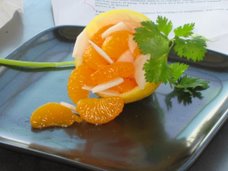
The stylists and the photogs are all artists. It was fascinating to watch the process of making the dish as visually appealing as possible. I have an image of Iwa intently and patiently rearranging the noodles one by one on a Korean Chap Chae dish with a pair of thin chopsticks. At another point, she carved her own lemon for a Filipino Orange and Radish Salad because she could not find a suitable prop that she liked. The photo shows the salad spilling gently from the lemon.
Q-Who arranges all the food for the shoot?
A-Once the stylist is done she takes it over to the photogs. All throughout this time Iwa is still checking with Wanda, Micki, Romeo and me about the designated dishes or the props. When Romeo takes over he starts taking photos using a state-of-the-art digital camera and a tv monitor to check each shot. It takes about 1 hour to get just one perfect shot for the cookbook of each dish. Can you imagine how many shots you could take in an hour? Romeo or Iwa would move a plate an 1/8", take a shot, readust, take another shot, blot the meat, take a shot, spray oil to make the food glisten, take a shot. At one point, Brian held an 18" strip of black paper 2' above the dish in order to get just the right lighting! Incredible. What does the photographer see that I don't? Alot, apparently. There is one final consultation with Micki. Wanda approves the final shot and it's on to the next dish.
I have a funny anecdote. I am proud of my fish cakes which I learned to make from Mrs. Jessie Kiyabu. My aku cakes had been plated by Iwa when Romeo came in to pick it up. He exclaimed "WOW, that's....." Now if I'm at, say a party, and someone likes my dish, they will say "WOW, that dish looks so YUMMY or 'ONO!". But not the photographer, he said "WOW, that dish is.... BEAUTIFUL!!" He actually said that that turned out to be his favorite photo so far. And I was proud of that.
Wanda and I were the Food people. The main thing that we are constantly focused on, outside of a shoot, is FLAVOR, how to boost it, how to create it, how to layer it, how do the flavors meld? The stylists and the photogs were all about the LOOK. After hanging out with these guys for days I said we'd gotten into what I call "Iwa-mode" where we would look at food as Media instead of something to consume.
Yes, we did have wonderful lunches which Wanda and I composed and yes, the leftovers were scrumptious.
-the foodiewahine
____________________________________________________________________
Wanda Adams wrote an article about this shoot in the Hnl. Advertiser and included her own recipe for a wonderful creamy haupia pudding at http://thehonoluluadvertiser.com/article/2007/Jun/13/il/FP706130331.html or you can go to the Hnl. Advertiser's website and check back issues for June 13 2007. The article is called "A creamy haupia that is versatile". The pudding garnered rave reviews from the crew.
Iwa Bush is an awesome stylist/artist and owner of the business The Visual Group. A subsidiary of that business is Faux Finishes which creates faux finishes, decorative painting and surface embelishments for homes. Their website is http://www.vgfauxfinishes.com/
Romeo S. Collado is a premier photographer who does commercial advertising, special events, public relations and special events. He can be reached at 808-677-4888.
We did 24 recipes for 3 days of shooting. I wore many hats on this shoot- food preparer, both whole dishes and prepping ingredients, buyer and food designer, I even participated in some food styling. One unexpected hat was food doctor. Have you ever repaired a pie with a cooked flour-water slurry? We did. Or made something that only looked like "chicken soup" using water and balsamic vinegar? We did.
It was a great crew made up of talented and truly just plain nice people. There was Wanda, the author, the General (in the best sense) and all around cook/preparer/baker. Chris Jose and Iwa Bush were the food stylists. Micki Fletcher was the art director and the representative of the publisher, Island Heritage. Romeo Collado was the photographer as he was for Wanda's first book, "The Island Plate". Brian Suda was Romeo's assistant. And me.
My cousin, Jeanette, sent me a series of interview-type questions about the shoot which I'll answer here.
Q-What goes into planning for a shoot? Does Wanda decide what to feature?
A-My understanding is that Wanda met with Micki a couple of times along with possibly other members of Micki's team at Island Heritage to decide on the look of the photos, the ambience and which recipes to feature. Wanda had spent months researching, testing and writing the recipes on her own. I think these are all recipes that are either hers or have never been published before.
I attended a pre-shoot meeting with Wanda, Micki and Romeo where Wanda described visually each dish of the 24 that would be in the shoot the following week. Wanda and I both had boxes and boxes of possible dishes and props to use for the shoot. We brainstormed about which type of dinnerware to use for what recipe, which props and even the feel or look of the photo (contemporary? family potluck? etc.). We whizzed through the dishes and we all took copious and fast notes on what was to go with what.
The day before the shoot Wanda started on the prep after she'd done her regular Advertiser work. Imagine! Having a regular job as a food editor and ALSO doing a cookbook. I really admire her work and work ethic!
Q- Do you and Wanda go shopping for all of the ingredients or does she just order.. and have them delivered.
A-I wish! No, no delivery. Wanda did the bulk of the buying of the ingredients. I would say based on our receipts it was about 2 to 1. I do remember the first day making 6 stops to markets and restaurants in Kailua, downtown and even Chinatown. Comes with the territory.
Q-Where do you cook?
A- This was the fun part. The day before the shoot we prepped the dishes that we could at Wanda's house. This would be like doing alot of the vegetables, peeling, cutting and some of the dressings. Anything that could be done ahead of time and not affect the look of freshness of the food.
The actual 3 day shoot was at the Sub Zero Wolf showroom and kitchen on King St. It was foodie toy heaven. Large expanses of counterspace. Commercial quality Sub Zero ovens, refrigerators and freezers. Stations with a sink and faucet all over the place. Gadgets and different dinnerware galore!
There were some things that both Wanda and I would make at home the night before or the morning of the shoot and then take it down to Sub Zero. E.g., I made a pudding that had to set overnight and aku cakes that were more easily fried at home. I think Wanda may have made her Codfish Croquettes at her home as well. Chef Keoni Chang from Foodland and also Chef Siu, the chef/owner from Pah Ke's brought luscious specialty fish dishes down to be shot. The timing had to be precise. That's why in my mind I call Wanda, the General, because she was the one coordinating the whole operation.
Q-What do the stylists do?
A- Wanda said it's like giving birth to a baby and then they put makeup on the baby and photograph her. Wanda and I prepare the dishes from scratch using all the ingredients (even down to a dash of fermented fish sauce, patis) as if they were to be eaten. However, this is all about how the dish will look through the camera lens so we also have to make it as sumptuous as possible. It took me twice as long to make perfect hockey puck-shaped aku cakes for the camera than it would have, if I was making that for dinner. After Wanda and I completed the dish and gotten it to look as good as we could, then Chris or Iwa would take over.
The stylists and the photogs are all artists. It was fascinating to watch the process of making the dish as visually appealing as possible. I have an image of Iwa intently and patiently rearranging the noodles one by one on a Korean Chap Chae dish with a pair of thin chopsticks. At another point, she carved her own lemon for a Filipino Orange and Radish Salad because she could not find a suitable prop that she liked. The photo shows the salad spilling gently from the lemon.
Q-Who arranges all the food for the shoot?
A-Once the stylist is done she takes it over to the photogs. All throughout this time Iwa is still checking with Wanda, Micki, Romeo and me about the designated dishes or the props. When Romeo takes over he starts taking photos using a state-of-the-art digital camera and a tv monitor to check each shot. It takes about 1 hour to get just one perfect shot for the cookbook of each dish. Can you imagine how many shots you could take in an hour? Romeo or Iwa would move a plate an 1/8", take a shot, readust, take another shot, blot the meat, take a shot, spray oil to make the food glisten, take a shot. At one point, Brian held an 18" strip of black paper 2' above the dish in order to get just the right lighting! Incredible. What does the photographer see that I don't? Alot, apparently. There is one final consultation with Micki. Wanda approves the final shot and it's on to the next dish.
I have a funny anecdote. I am proud of my fish cakes which I learned to make from Mrs. Jessie Kiyabu. My aku cakes had been plated by Iwa when Romeo came in to pick it up. He exclaimed "WOW, that's....." Now if I'm at, say a party, and someone likes my dish, they will say "WOW, that dish looks so YUMMY or 'ONO!". But not the photographer, he said "WOW, that dish is.... BEAUTIFUL!!" He actually said that that turned out to be his favorite photo so far. And I was proud of that.
Wanda and I were the Food people. The main thing that we are constantly focused on, outside of a shoot, is FLAVOR, how to boost it, how to create it, how to layer it, how do the flavors meld? The stylists and the photogs were all about the LOOK. After hanging out with these guys for days I said we'd gotten into what I call "Iwa-mode" where we would look at food as Media instead of something to consume.
Yes, we did have wonderful lunches which Wanda and I composed and yes, the leftovers were scrumptious.
-the foodiewahine
____________________________________________________________________
Wanda Adams wrote an article about this shoot in the Hnl. Advertiser and included her own recipe for a wonderful creamy haupia pudding at http://thehonoluluadvertiser.com/article/2007/Jun/13/il/FP706130331.html or you can go to the Hnl. Advertiser's website and check back issues for June 13 2007. The article is called "A creamy haupia that is versatile". The pudding garnered rave reviews from the crew.
Iwa Bush is an awesome stylist/artist and owner of the business The Visual Group. A subsidiary of that business is Faux Finishes which creates faux finishes, decorative painting and surface embelishments for homes. Their website is http://www.vgfauxfinishes.com/
Romeo S. Collado is a premier photographer who does commercial advertising, special events, public relations and special events. He can be reached at 808-677-4888.
Monday, May 21, 2007
Kahiko in Chapel Hill
The biggest attraction to Chapel Hill, North Carolina, to me, is my two adorable granddaughters. Now that I'm a grandmother I can understand why grandparents go so ga-ga over their mo'opuna. Maya just made four and Eliza is 1 year and 4 months, really cute ages for both. Collette and Miles have extremely busy schedules filled to the brim with work and their home, but most importantly, their lives revolve around their two youngsters. Maya's preschool is a big part of their lives since the school encourages and relies on parental participation.
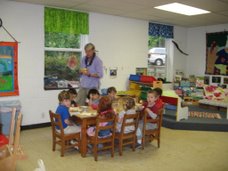
I was honored to be asked to give a little talk, maybe even a demonstration, about Hawai'i for Family Day for Maya and her four-year-old classmates. It was the Grandma from Hawai'i for Show and Tell. Believe me, I asked many questions of Collette about the class and agonized over what I was going to do with this time. Turns out the answer was very natural; the kids were studying Volcanoes. The week before I arrived, a chemist father of a student had even manufactured an "explosion" complete with flowing lava of the papier mache volcanoes the class had made.
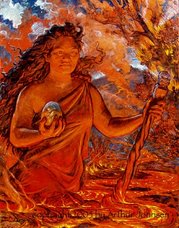
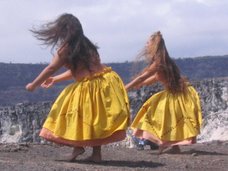
A year ago my kumu, Ann, taught me a Pele kahiko about the movement of four different types of lava so how could I ignore that fortuitous fact and not do a hula for the keiki? It was cold on Family Day morning. Cold by Hawai'i standards, about 58 degrees. I wore a long sleeved shirt, a long sleeved silk sweater, long pants, socks and for just a touch of Hawai'i, a lavender pareau draped across one shoulder as a kikepa. It was a little surreal to be chanting an 'oli and to be explaining the movements to the class in a North Carolina classroom. However, once I got started I got used to stopping and explaining, dancing, stopping, etc. I had the class repeat the Hawaiian words to me which they did perfectly. I danced the "Hua 'ina" verse, for example, which means boiling up, bubbling on the surface with quick circular hand motions. Even though she was thousands of miles away I felt a bit of my kumu there, her distinctive voice chanting with me.
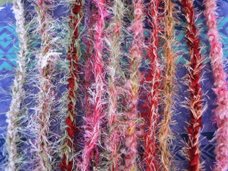
I took this assignment very seriously because who knows if or how it would affect each child? Would they want to see Volcano and Hawai'i themselves? Would I be able to convey a bit of precious aloha to each child so that they had a sense of where we are from? I wanted to bring a lei that I'd made, even if it was not made of flowers. I made 10 simple eyelash yarn lei for each of Maya's classmates and gave two more complicated lei to Maya's Teacher Maureen and Maya. I was fortunate that I found exactly the Hawaiian Volcanoes book I'd been looking for at the Honolulu airport before I left, to gift to the school and Maya's class. I gave 5 Hawai'i calendars for the dedicated teachers. They all, individually, thanked me in the playground after.
I was happy that the children experienced something different which is directly related to Maya's legacy.
-foodiewahine
____________________________________________________________________
The book, "Hawai'i, Land of Volcanoes" by Jan Tenbruggencate is available on amazon.com and local bookstores. The photographer is a UH professor, Douglas Peebles, who taught Art 101 to Jimbo, me and a generation of UH students.
____________________________________________________________________
Copyright 2007-2008. Anything to Eat. All rights reserved. This material and all material on this site may not be published, broadcast, rewritten or redistributed without permission. The author disclaims all liabilities in connection with the use of the information contained within.
I was honored to be asked to give a little talk, maybe even a demonstration, about Hawai'i for Family Day for Maya and her four-year-old classmates. It was the Grandma from Hawai'i for Show and Tell. Believe me, I asked many questions of Collette about the class and agonized over what I was going to do with this time. Turns out the answer was very natural; the kids were studying Volcanoes. The week before I arrived, a chemist father of a student had even manufactured an "explosion" complete with flowing lava of the papier mache volcanoes the class had made.
A year ago my kumu, Ann, taught me a Pele kahiko about the movement of four different types of lava so how could I ignore that fortuitous fact and not do a hula for the keiki? It was cold on Family Day morning. Cold by Hawai'i standards, about 58 degrees. I wore a long sleeved shirt, a long sleeved silk sweater, long pants, socks and for just a touch of Hawai'i, a lavender pareau draped across one shoulder as a kikepa. It was a little surreal to be chanting an 'oli and to be explaining the movements to the class in a North Carolina classroom. However, once I got started I got used to stopping and explaining, dancing, stopping, etc. I had the class repeat the Hawaiian words to me which they did perfectly. I danced the "Hua 'ina" verse, for example, which means boiling up, bubbling on the surface with quick circular hand motions. Even though she was thousands of miles away I felt a bit of my kumu there, her distinctive voice chanting with me.
I took this assignment very seriously because who knows if or how it would affect each child? Would they want to see Volcano and Hawai'i themselves? Would I be able to convey a bit of precious aloha to each child so that they had a sense of where we are from? I wanted to bring a lei that I'd made, even if it was not made of flowers. I made 10 simple eyelash yarn lei for each of Maya's classmates and gave two more complicated lei to Maya's Teacher Maureen and Maya. I was fortunate that I found exactly the Hawaiian Volcanoes book I'd been looking for at the Honolulu airport before I left, to gift to the school and Maya's class. I gave 5 Hawai'i calendars for the dedicated teachers. They all, individually, thanked me in the playground after.
I was happy that the children experienced something different which is directly related to Maya's legacy.
-foodiewahine
____________________________________________________________________
The book, "Hawai'i, Land of Volcanoes" by Jan Tenbruggencate is available on amazon.com and local bookstores. The photographer is a UH professor, Douglas Peebles, who taught Art 101 to Jimbo, me and a generation of UH students.
____________________________________________________________________
Copyright 2007-2008. Anything to Eat. All rights reserved. This material and all material on this site may not be published, broadcast, rewritten or redistributed without permission. The author disclaims all liabilities in connection with the use of the information contained within.
Subscribe to:
Posts (Atom)