I know I've neglected this blog so finally here's a new post.
In December I invited some family members and friends to a sausage making session at our church. My friend, David, and I hatched this session because we were both interested in learning to make really good sausage. He had tried before but was not happy with the results. After some research using the Internet and my own, as well as my friend, Elsie's, extensive collection of cookbooks, I came up with the following recipe.
I gave some sausages to Elsie and family. My favorite comment was from Elsie. She said that she took one bite and it transported her back to her childhood eating her Aunt Bina's Portuguese sausage!
Now don't expect it to taste like commercially prepared sausage. This has a much more full bodied flavor.
Easy Old Timey Sausage
Combine with hands:
1 lb. of pork butt, about 2/3 lean and 1/3 fat, diced fine
One-half tsp. each of sherry, whiskey and vinegar
1 tsp. ea of garlic powder and onion powder
Place in fridge
Grind One-half tsp. ea. of cinnamon, chili, oregano, ground black pepper, sugar
and one-quarter tsp. of cayenne
1 T. ea. of paprika and Hawaiian salt,
1 tsp. chili pepper flakes and
1 bay leaf
with a mortar and pestle or better- a spice grinder.
Set aside.
Saute 1 large clove of garlic, minced and 3 T. finely minced onion in a pan w/ 1 tsp. of oil, until garlic and onion are translucent. Turn off heat. Dab off any excess oil with a paper towel. Add herb mixture to garlic-onion mixture in pan while the pan is still hot.
Combine well. Cool completely.
Add garlic-onion-herb mixture to the pork mixture with your hands until well-combined.
Let sausage mixture sit in fridge at least overnight and up to 18 hours. (Do not skip this step. The spices and herbs need time to mellow and meld with the other ingredients)
Form into compacted logs with a diameter of 2 and one-half inches and wrap in cheesecloth to hold shape.
Refrigerate at least 2 hours. Cut into slices and fry.
Or, form into compacted flat patties and fry immediately.
If you are ambitious you can force the mixture into casings for sausage and smoke the links.
Drain on paper towels.
Wanda Adams wrote an article that appeared in today's Honolulu Star-Advertiser, the Today's section for 2/16/11. To see the article, you can click the link to the left of this posting (under the photo of Wanda and David) or go to the Star-Advertiser's website for 2/16/11. If you scroll down to the bottom of their site you will see the article titled " How Sausage Is Made".
Wednesday, February 16, 2011


Saturday, September 18, 2010
Loco Moco Drive Inn-Moanalua
My friend's, Onna's, son recently became the co-owner of the Loco Moco Drive Inn at Moanalua Shopping Center. Onna's definitely passed her cooking skills to her son. Several blog entries ago I wrote about Onna's fabulous green onion chicken demo at Elsie's home.
We had lunch at Loco Moco at Onna's invitation. Right off it is clear that it is the only truly local eating establishment in the area. The rest of the places are franchises from the Big, Big Island. Loco Moco Drive Inn has the usual plate lunch favorites (Chicken Cutlet, Beef Stew, Pork Chops, e.g., even Oxtail Soup) but these are executed with care. A flavorful Pork Adobo was featured as a special on the day we were there.
Onna is one proud mama and for good reason. Everyone we met was friendly and helpful. This place has that perfect combination of what I call fast slow food. What's that? Well it has fast service but it's also the kind of slow comfort-food cooking you would expect from home. Fast, fresh, LOTS and reasonable.
Case in point, the mini-sized ($5.25) mochiko chicken. Each mini plate is heaped with the entree and a generous scoop of rice and either potato or toss salad. The mochiko chicken was about as perfect as they come. Hot from the fresh oil. Crispy, thin coating surrounding well-seasoned, slightly sweet and moist chicken. I think a mini plate would generously satisfy most people unless you are plain starving.
Word has gotten around because it was constantly busy while we were there. One sure sign of a good pick-policemen on break chowing down on the 'ono kaukau! Have you ever been stuck near the airport waiting for a flight or hungry after leaving Target nearby? Now there's a great little place to grab some grindz.
We had lunch at Loco Moco at Onna's invitation. Right off it is clear that it is the only truly local eating establishment in the area. The rest of the places are franchises from the Big, Big Island. Loco Moco Drive Inn has the usual plate lunch favorites (Chicken Cutlet, Beef Stew, Pork Chops, e.g., even Oxtail Soup) but these are executed with care. A flavorful Pork Adobo was featured as a special on the day we were there.
Onna is one proud mama and for good reason. Everyone we met was friendly and helpful. This place has that perfect combination of what I call fast slow food. What's that? Well it has fast service but it's also the kind of slow comfort-food cooking you would expect from home. Fast, fresh, LOTS and reasonable.
Case in point, the mini-sized ($5.25) mochiko chicken. Each mini plate is heaped with the entree and a generous scoop of rice and either potato or toss salad. The mochiko chicken was about as perfect as they come. Hot from the fresh oil. Crispy, thin coating surrounding well-seasoned, slightly sweet and moist chicken. I think a mini plate would generously satisfy most people unless you are plain starving.
Word has gotten around because it was constantly busy while we were there. One sure sign of a good pick-policemen on break chowing down on the 'ono kaukau! Have you ever been stuck near the airport waiting for a flight or hungry after leaving Target nearby? Now there's a great little place to grab some grindz.
Saturday, July 3, 2010
Brownies From Heaven
"Taste of Heaven Brownies" article from the Honolulu Advertiser, November 11, 2009 by Wanda Adams
This brownie dish is perfect for sharing
By Wanda A. Adams
Had a taste of heaven the other day.My friend Marylene Chun (who, at this point, ought to be named associate food editor, since she helps me so much) was dropping off something I'd forgotten at a cooking demo, and as a bonus, left us some brownies.I, unfortunately, am starting to put on pounds, so I only had a bite, but they were perfect: crisp on the outside, meltingly tender on the inside. My husband had them for dessert several nights in a row. (Actually, one night, I think he had them for dinner!)The recipe comes from the Web site tasteofhome.com. This recipe makes a large pan, so it would be perfect for family gatherings, school events, sports potlucks and such. (Most brownie recipes only make an 8-by-8-inch panful.)One important rule with brownies is not to overbake them. Be sure to keep track of time and check them.
Brownies from Heaven
1 cup butter• 2 cups sugar• 2 eggs• 1 teaspoon vanilla• 2 cups flour• 1/2 cup baking cocoa• 1 cup chopped walnuts.
In a large bowl, cream butter and sugar until light and fluffy. Add eggs, one at a time, beating well after each addition. Stir in vanilla. Combine flour and cocoa, add to creamed mixture just until combined. Stir in walnuts.Spread in ungreased 13-by-9-inch baking pan. Bake at 350 degrees for 23 to 28 minutes or until a toothpick inserted near the center comes out clean. Cool on a wire rack.Makes 2 dozen brownies.
from Marylene-
I've made this recipe at least a dozen times and I can report that it is foolproof. Some personal Notes:
Make sure all ingredients are at room temperature.
I line the pan with foil which makes for easier cleanup and removal. You can place the pan on top of a sheet of foil, mold the foil around the outside of the pan and then you can easily fit the foil inside of the pan. No need to grease.
Use good quality cocoa powder like Callebaut, Sharffen Berger or an Extra Dark Dutch-processed cocoa.
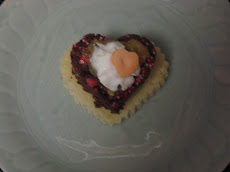
For my oven, baking it the full 28 minutes gives me a sturdy brownie that is easy to cut with a pizza cutter or a long serrated knife. Brownies baked for 28 minutes and then cooled are also easy to cut into hearts or other shapes using a large cookie cutter, as in the photo to the left of this blog post.
At 23 minutes, you get a more fragile but fudgier brownie.
I put half the walnuts in the batter and 1/2 on top before baking, gently pressing down so that they won't fall off after baking.
-the foodiewahine
This brownie dish is perfect for sharing
By Wanda A. Adams
Had a taste of heaven the other day.My friend Marylene Chun (who, at this point, ought to be named associate food editor, since she helps me so much) was dropping off something I'd forgotten at a cooking demo, and as a bonus, left us some brownies.I, unfortunately, am starting to put on pounds, so I only had a bite, but they were perfect: crisp on the outside, meltingly tender on the inside. My husband had them for dessert several nights in a row. (Actually, one night, I think he had them for dinner!)The recipe comes from the Web site tasteofhome.com. This recipe makes a large pan, so it would be perfect for family gatherings, school events, sports potlucks and such. (Most brownie recipes only make an 8-by-8-inch panful.)One important rule with brownies is not to overbake them. Be sure to keep track of time and check them.
Brownies from Heaven
1 cup butter• 2 cups sugar• 2 eggs• 1 teaspoon vanilla• 2 cups flour• 1/2 cup baking cocoa• 1 cup chopped walnuts.
In a large bowl, cream butter and sugar until light and fluffy. Add eggs, one at a time, beating well after each addition. Stir in vanilla. Combine flour and cocoa, add to creamed mixture just until combined. Stir in walnuts.Spread in ungreased 13-by-9-inch baking pan. Bake at 350 degrees for 23 to 28 minutes or until a toothpick inserted near the center comes out clean. Cool on a wire rack.Makes 2 dozen brownies.
from Marylene-
I've made this recipe at least a dozen times and I can report that it is foolproof. Some personal Notes:
Make sure all ingredients are at room temperature.
I line the pan with foil which makes for easier cleanup and removal. You can place the pan on top of a sheet of foil, mold the foil around the outside of the pan and then you can easily fit the foil inside of the pan. No need to grease.
Use good quality cocoa powder like Callebaut, Sharffen Berger or an Extra Dark Dutch-processed cocoa.
For my oven, baking it the full 28 minutes gives me a sturdy brownie that is easy to cut with a pizza cutter or a long serrated knife. Brownies baked for 28 minutes and then cooled are also easy to cut into hearts or other shapes using a large cookie cutter, as in the photo to the left of this blog post.
At 23 minutes, you get a more fragile but fudgier brownie.
I put half the walnuts in the batter and 1/2 on top before baking, gently pressing down so that they won't fall off after baking.
-the foodiewahine
Thursday, June 10, 2010
Small favor
I've heard many complaints from friends and family about the closing of the Honolulu Advertiser but especially about the fact that the new paper, the Star-Advertiser, did not pick up Wanda Adams as a columnist. I think we all felt it deeply, and with a sense of loss and shock, when we opened the Food section on Wednesday and there were no bylines by Wanda.
A possible remedy. You can write to a Vice President and editor of the Star-Advertiser, Frank Bridgewater, and make a case for Wanda based on how you feel about her and her writing. Mr. Bridgewater REQUESTED feedback on future columnists in the first issue of the new paper. His email address is
fbridgewater@staradvertiser.com
Many thanks. I figure it's the very least we can do for Wanda after all the excellent and enjoyable articles and recipes she's blessed us with all these years. Do you want to see more?
UPDATE: June 14, 2010
Keep those comments coming to the Star-Advertiser. Wanda's been offered a monthly column in the new paper's Wed. Food Section. And if it proves popular and people are VOCAL about it (hint) then they may give her a bi-monthly or weekly column. Thanks for the support!
A possible remedy. You can write to a Vice President and editor of the Star-Advertiser, Frank Bridgewater, and make a case for Wanda based on how you feel about her and her writing. Mr. Bridgewater REQUESTED feedback on future columnists in the first issue of the new paper. His email address is
fbridgewater@staradvertiser.com
Many thanks. I figure it's the very least we can do for Wanda after all the excellent and enjoyable articles and recipes she's blessed us with all these years. Do you want to see more?
UPDATE: June 14, 2010
Keep those comments coming to the Star-Advertiser. Wanda's been offered a monthly column in the new paper's Wed. Food Section. And if it proves popular and people are VOCAL about it (hint) then they may give her a bi-monthly or weekly column. Thanks for the support!
Tuesday, June 1, 2010
Big Island Retreat
Maybe I should start calling this blog anythingtoeatonthebigisland. I'm so caught up with the BI's great eating places. Earlier last month I had one day's notice to join our church's, Hope Chapel Kaneohe Bay's, Timesetters' retreat to the BI. Of course I said YES.
We were advised to bring one carry-on for the weekend which proved to be challenging but ultimately quite doable. I went with these time-honored packing tips: making sure every bottom went with several tops, bringing the smallest possible amount of each cosmetic or lotion, bringing clothing that could serve dual purposes like a windbreaker that is also water repellent.
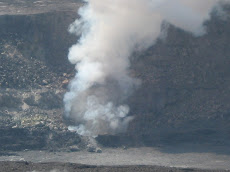
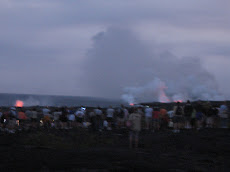
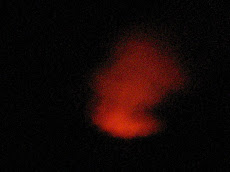
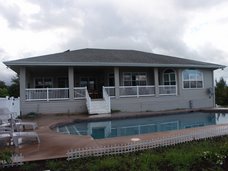
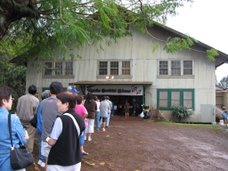
We had a wonderful time staying at the Kilauea Military Camp which is quite comfortable with it's own dining room, coffee cafe and a sundries and souvenirs store. Not to mention their bowling alley, tennis courts, etc. It's right in the Volcano National Park so we spent one evening at the Glow (the orange glow reflected onto a large fume above Halema'uma'u Crater). Jaggar Museum Lookout, where we shivered as we watched the Glow, is just 10 min. from KMC. It was great to be able to wake up early and walk through the park listening to birdsong before all the buses arrived.
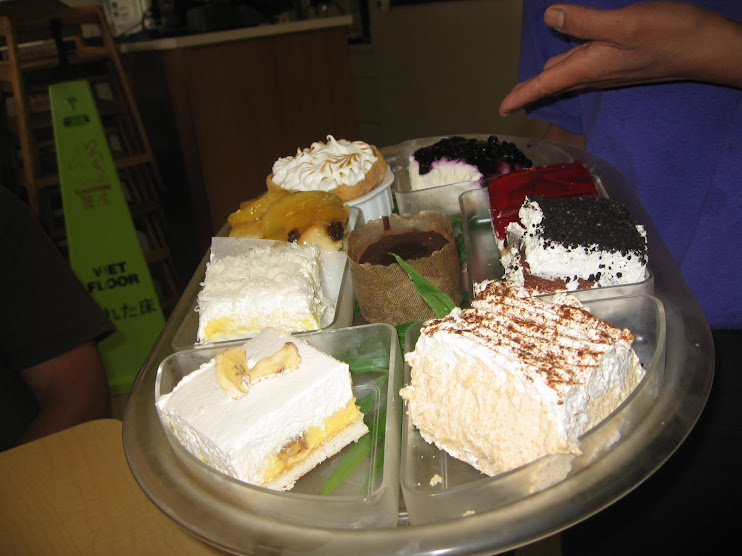
I digress. We hit the two most important can't-miss Hilo places on my list: Ken's for grilled mahi and Kuhio Grill for locomoco. At KG's we were stuffed from a huge lunch when Iris in our group innocently asked just to "see" the dessert menu. Well, the people at KG's are no dummies! They brought out their dessert TRAY. And it worked well on us, we ordered 5 desserts between the 6 of us.
Omiyage stops: Two Ladies Kitchen for the best mochi and the KTA at Puainako for locally made cookies and jam. It happens that I'm working with the owner of Two Ladies, Nora, to develop some cream-based mochi. We also picked up heavy duty bentos at Hiro's Place, just down from KTA in the strip mall, to eat at Lapahoehoe Point.
I enjoyed being in a spacious van and not having to drive for a change. I went with the flow and did several things I'd never done before like going up to the Onizuka Visitor's Center on the flank of Mauna Kea.
Even more important than the food was the fact that while I already knew 10 of the retreatgoers I ended up making 20 new friends. God is Good.
________________
Note: Wanda Adams is starting a new food blog. Find her at
waa-ourislandplate.blogspot.com
We were advised to bring one carry-on for the weekend which proved to be challenging but ultimately quite doable. I went with these time-honored packing tips: making sure every bottom went with several tops, bringing the smallest possible amount of each cosmetic or lotion, bringing clothing that could serve dual purposes like a windbreaker that is also water repellent.
We had a wonderful time staying at the Kilauea Military Camp which is quite comfortable with it's own dining room, coffee cafe and a sundries and souvenirs store. Not to mention their bowling alley, tennis courts, etc. It's right in the Volcano National Park so we spent one evening at the Glow (the orange glow reflected onto a large fume above Halema'uma'u Crater). Jaggar Museum Lookout, where we shivered as we watched the Glow, is just 10 min. from KMC. It was great to be able to wake up early and walk through the park listening to birdsong before all the buses arrived.
I digress. We hit the two most important can't-miss Hilo places on my list: Ken's for grilled mahi and Kuhio Grill for locomoco. At KG's we were stuffed from a huge lunch when Iris in our group innocently asked just to "see" the dessert menu. Well, the people at KG's are no dummies! They brought out their dessert TRAY. And it worked well on us, we ordered 5 desserts between the 6 of us.
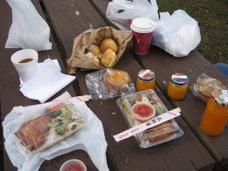
Omiyage stops: Two Ladies Kitchen for the best mochi and the KTA at Puainako for locally made cookies and jam. It happens that I'm working with the owner of Two Ladies, Nora, to develop some cream-based mochi. We also picked up heavy duty bentos at Hiro's Place, just down from KTA in the strip mall, to eat at Lapahoehoe Point.
I enjoyed being in a spacious van and not having to drive for a change. I went with the flow and did several things I'd never done before like going up to the Onizuka Visitor's Center on the flank of Mauna Kea.
Even more important than the food was the fact that while I already knew 10 of the retreatgoers I ended up making 20 new friends. God is Good.
________________
Note: Wanda Adams is starting a new food blog. Find her at
waa-ourislandplate.blogspot.com
Saturday, February 20, 2010
Onna's Cold Ginger Chicken

Chicken on the left simmered for 45 min. (well-done) Chicken on the right, 30 min. (pinkish and a bit underdone, the way most Chinese eat it)
My friend, Elsie, hosted a Chinese New Year's gathering last week which included a demo of four Chinese dishes by her housekeeper/cook Onna Liang. Onna is from Guandong with solid cooking cred. Her son cooks for and owns Aloha Barbecue on Kapahulu Ave. and her husband works at a restaurant as well. We were fascinated as we watched her whip up Cold Ginger Chicken, Eggplant and Tofu in Black Bean Sauce, Chao'd Pumpkin and Fried Rice for 20 people in under 2 hours.
The Cold Ginger Chicken is an ubiquitous dish on Chinese restaurant menus but Onna's was truly outstanding. I always knew that the restaurants must either have access to exceptional ingredients (super tender, fresh chicken from a farm?) or specialized techniques to make the chicken so meltingly tender and with so much flavor. Turns out it's the latter.
Use the HECO recipe(from the Hawaiian Electric Company's website) below but add these tips.
This is what we learned from Onna:
1.) Simmer the chicken (instead of turning off the heat) in 1/4 c. of Hawaiian salt, and a stockpot 2/3 full of water for 45 min. This Hot Brine plumps the chicken and flavors it perfectly.
2.) Whiz the ingredients in a Cuisinart until it is a fine puree. I'd always chopped it up fine but the puree is much better. Optional: Im sai, Chinese parsley and sesame seed oil for the sauce.
3.) Pour 1/4 c. of oil in a saucepan and heat the sauce on Med., stirring constantly for 2 min. before serving.
The chicken was delicious warm with the hot sauce.
These tips together produced the best Ginger Chicken I'd ever had from a home kitchen. It was indistinguishable from chicken from a good Chinese restaurant. I was very pleased at my first try at duplicating Onna's dish. However, still tinkering with the amount of Hawaiian salt because while I do want the advantages of what I call a Hot Brine, I also want a stock leftover that is not rendered inedible by the salt.
Cold Ginger Chicken
Demonstrated by: 2002 2nd Princess Sherri Seto
Ingredients
1 whole (3 to 5 lb) chicken fryer, Water, 1 cup cubed ginger root, 4 to 5 green onions, cut into 2-inch lengths, 3/4 cup salad oil, 2 teaspoons salt, 1 teaspoon white pepper
Instructions
Clean and trim excess fat from chicken. Fill a large stockpot 1/2 full of water; bring water to a boil. Add chicken and additional water, if necessary, to completely cover the chicken. Cover and bring water to a boil again. Turn off heat and let stand for 1 hour. Remove chicken from pot and drain. Cover chicken and refrigerate until chilled. Cut chicken into 2 x 1-inch pieces; place in serving dish. Combine ginger and green onions in a food processor; process until finely chopped. Add oil, salt, and pepper; chill. To serve, pour ginger mixture over chicken or serve ginger mixture in a separate bowl. Makes 4 to 6 servings.
-foodiewahine
Wednesday, February 10, 2010
Copyright 2009--2010. Anything to Eat. All rights reserved. This material and all material on this site may not be published, broadcast, rewritten or redistributed without permission. The author disclaims all liabilities in connection with the use of the information contained within.
Please note: leave a comment with your email address in order to obtain permission to publish articles, blogposts, photographs and/or recipes from this blog in any media (including the Internet).
Please note: leave a comment with your email address in order to obtain permission to publish articles, blogposts, photographs and/or recipes from this blog in any media (including the Internet).
Subscribe to:
Posts (Atom)